
 020 7898 0500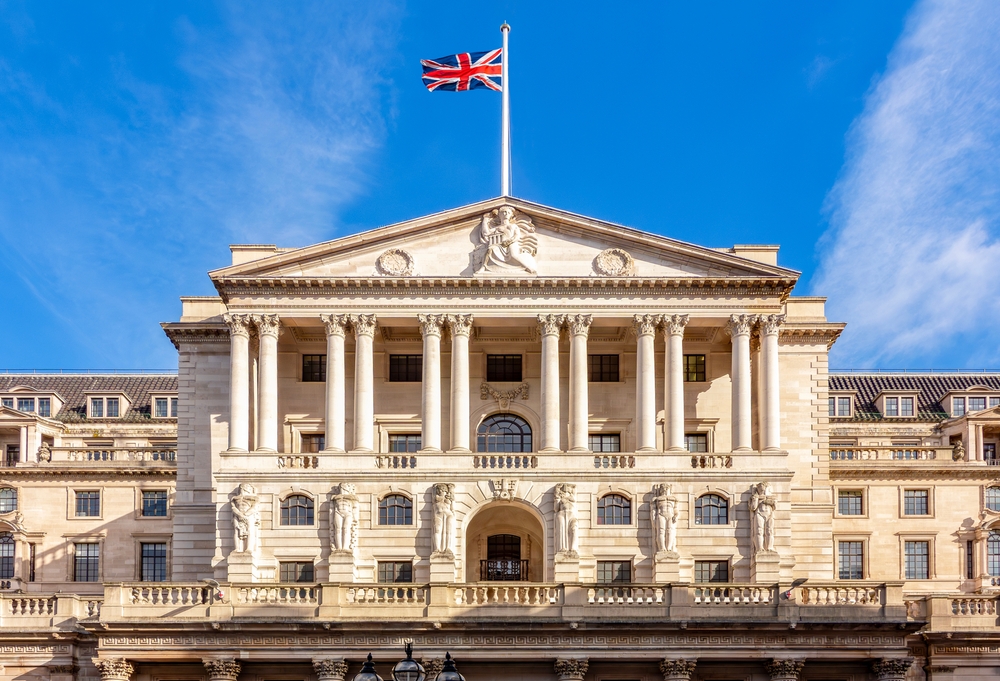
The Bank of England
The Bank of England (BoE) elected to hold interest rates at 3.75% yesterday, following on from the US Federal Reserve which also held on Wednesday evening.
The pound then strengthened against the US dollar by close to 1% and against the euro by around 0.25%.
The euro was supported more generally by an interesting set of high-level economic data, the most notable elements of which were eurozone GDP at an annualised 1%, double what had been expected. Leading the field was western Europe’s star performer Spain, at 2.7% annual growth, then the Netherlands at 1.3%. France, Italy and Germany were a little more anaemic at 0.7-1% growth, but this was all above what the markets had predicted, mainly based on AI-related investment and government spending.
Back in Threadneedle Street, the BoE’s Monetary Policy Committee voted by six to three to hold rates, but the three voting for an increase to 4% added up to what might be called a ‘hawkish hold’ – one where the direction of travel is towards interest rate increases to kill off inflation.
This was in contrast to the Fed’s more dovish outlook and led to GBP/USD falling sterling’s way. A rate increase from the BoE in September is now priced at 75%.
While the USA’s rise in GDP of 1.5% would have put it among the first rank in the eurozone it was a severe disappointment on the other side of the pond.
While GDP may be mixed, it is the inflation side of the equation that central banks are most concerned about and, it might appear, with good reason. We’ve just had a result for France and it was not good – at 0.6% in July, up from a drop of 0.3% the previous month. With the rest of eurozone reporting shortly, this will be the main story for GBP/EUR today.
One price not rising as much as some of us would like, the Nationwide has just reported house price rises in the UK of 0.1% in July, an annualised 1.8%.
GBP: Pound gains support after difficult week
Yesterday the pound fought back against the various dollars, most notably USD but also CAD and AUD, while losing out to the other safe havens and Scandinavian currencies. It’s a pretty quiet day for the data next week, but the markets will continue to get used to the Burnam government, probing for its underlying priorities as ministers settle in.GBP/USD: the past year
EUR: Positive GDP data fails to power up euro
Despite the good news on Gross Domestic Product (GDP), the euro failed to capitalise, gaining on the US dollar and yuan but losing heavily to the yen, pound and Swiss franc. Yesterday’s blizzard of data continues today, with inflation shortly across the eurozone, then on Monday it will be final results for PMI.GBP/EUR: the past year
USD: GDP slip puts dollar in tail spin
US economic growth being 1.5% when 2.1% was expected led to weekly losses for USD of between 1 and 2% against most rivals, notably the Japanese yen, but across the board. Next week kicks off with ISM Manufacturing PMI, but being the start of the month as usual it will be mainly about the labour market, with JOLTs job openings and Non-Farm Payrolls.USD/GBP: the past year
For more on currencies and currency risk management strategies, please get in touch with your Smart Currency Business account manager on 020 3918 7255 or your Private Client account manager on 020 7898 0541.