 020 7898 0500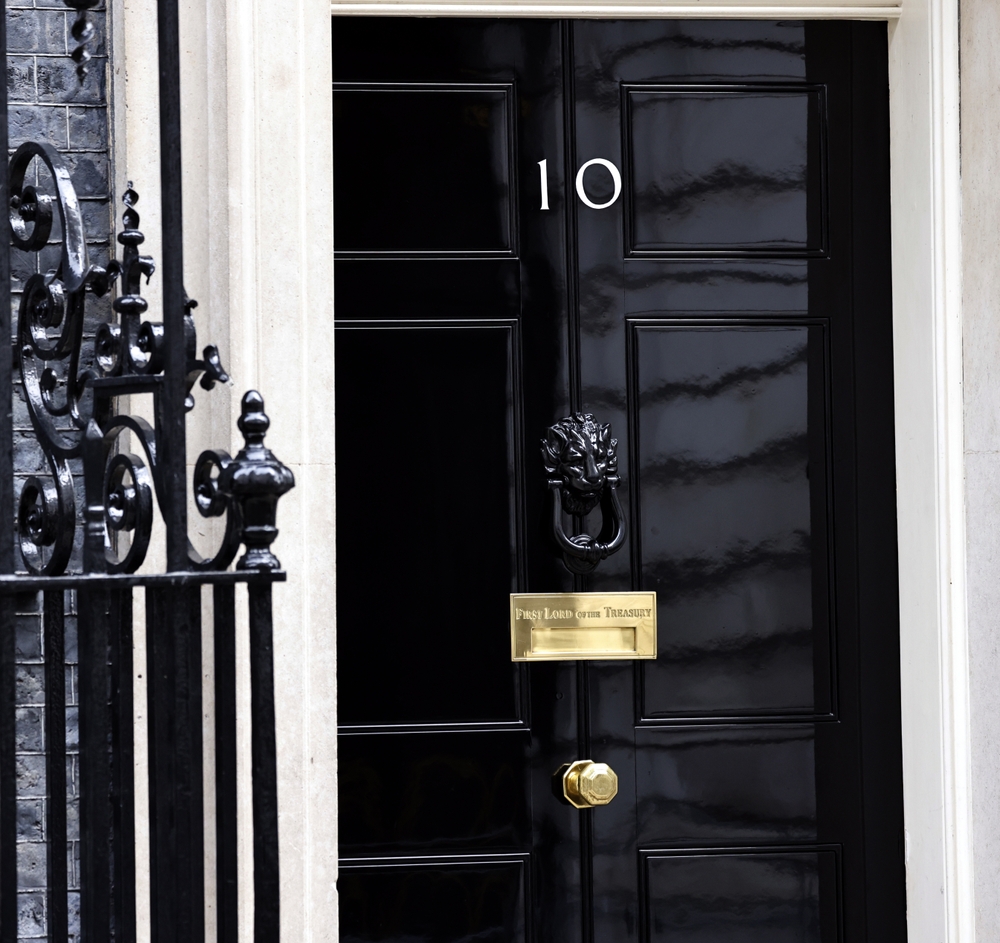
Sir Keir Starmer announced he was resigning as UK prime minister on Monday. (Sean Aidan Calderbank / Shutterstock)
Today marks ten years to the day since Britain voted to leave the European Union, and there was perhaps no more fitting way to mark that anniversary than the news that Sir Keir Starmer had resigned as prime minister.
Andy Burnham appears virtually assured to replace Starmer following Wes Streeting’s endorsement yesterday, becoming the UK’s seventh prime minister in a little over a decade. Television cameras followed Burnham’s train from Manchester to London like a Hollywood chase scene, but sterling was steady, bond markets were muted and the lack of financial fireworks made for a strangely calm start to the week.
Burnham’s coronation has looked likely for weeks now, which helps explain why the reaction was on the restrained side. Standing at the dreaded lectern outside Number 10, Starmer set out a leadership timetable that would see his replacement move in toward the end of July, should Burnham indeed stand unopposed, as now seems likely.
Attention will soon shift to the person named as his chancellor. Candidates range from the right of the party (Streeting) to the left (Ed Miliband), giving the selection an added spice. The pound will almost certainly be affected by his choice, both in terms of its impact on economic growth and government finances.
Of course, UK politics is far from the only thing on the menu for currency markets this week. The US and Iran indicated they had made progress in their efforts to negotiate a lasting peace yesterday, with around 400 vessels lined up to exit their months-long quarantine.
Today’s services report is another big moment for the UK economy. Experts forecast a modest uplift in the purchasing manager’s index (PMI) score in June, although one that might still come in below the neutral 50 score.
The Office for National Statistics (ONS), which you may recall came under heavy fire around the time of the autumn Budget, has admitted that next month’s batch of jobs data will be of a lower quality. That’s due to issues with its surveys resulting in around 20% fewer responses compared with the previous period.
Make sure any upcoming transactions are protected against the risks of sudden market movements. Secure a fixed exchange rate now with a forward contract; call your account manager on 020 3918 7255 to get started.
GBP: Hot start
As households brace for the heat dome to encase these isles, the pound made a hot start to the week, strengthening by around half a cent against the US dollar and the euro on Monday. Much of the impact that a change in prime minster might have has been priced in for weeks, so the pound benefited from a clearly defined timeline, if nothing else.GBP/USD: the past year
EUR: In the doldrums
The euro lost the best part of a cent to the pound on Monday and hovered near three-month lows against the US dollar. Optimism that the US and Iran would soon negotiate an end to the war helped it recover a little, but the euro is struggling to generate momentum as higher prices cloud the interest rate picture.GBP/EUR: the past year
USD: A return to the dominant dollar?
While the US dollar might weaken should peace prevail, it’s starting to feel like it has rediscovered its previous form. The US economy has powered on through threat after threat. Coupled with a greater chance of a more hawkish Federal Reserve, there is a chance the dollar’s recent strength is here to stay.USD/GBP: the past year
For more on currencies and currency risk management strategies, please get in touch with your Smart Currency Business account manager on 020 3918 7255 or your Private Client account manager on 020 7898 0541.