
 020 7898 0500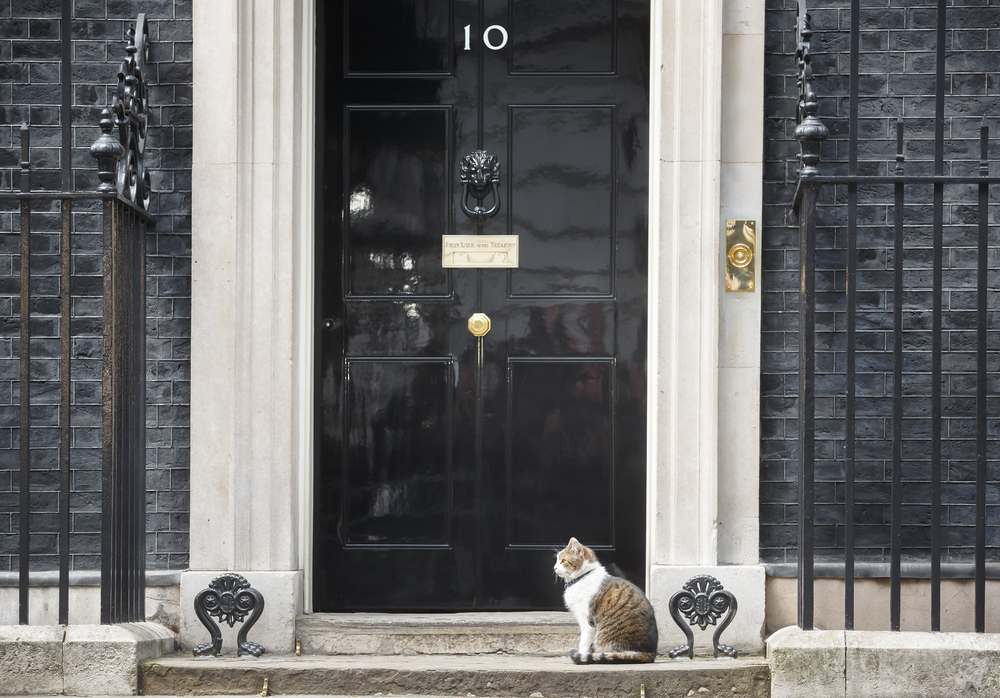
Larry the cat may soon have a new co-habitant at Number 10. Editorial credit: Drop of Light/Shutterstock.
Last updated: 09 February 2026
As Sir Keir Starmer’s Labour government limps towards what feels its inevitable end point, the pound has weakened and borrowing costs have shot up. Currency markets are braced for the chaos and ministerial jostling that always accompanies a change in leadership, something the UK has witnessed all too often in the past decade.
Although it’s hard to forecast the impact on the pound, British businesses need to be ready for yet another dicey period. Regardless of whether Starmer stays or goes, we can help you implement comprehensive solutions that support your objectives. Book an initial consulation with our experts today to see how we could you enhance your cashflow and protect your profits.
How did we get here?
Since winning the general election in July 2024, the prime minister has attempted to steer the country through a growth slump and navigate a cavalcade of crises. Starmer may consider himself unlucky that he was dealt a hand whose cards no longer carried value in our fractured, unstable world.
It has been a lonely and dispiriting job at times. But the prime minister (and his senior advisors) hasn’t helped himself. There have been a string of costly miscalculations, such as the appointment and subsequent downfall of former American ambassador Peter Mandelson and the U-turn over winter fuel allowances. Some bad luck has been mixed in – the Office for National Statistics mistakenly publishing the autumn Budget early wasn’t the government’s fault – but it all contributed to the sense of chaos at the highest level.
The UK’s economic recovery has been slow. Despite recent signs that things may be picking up, the majority of voters are smarting from reduced buying power and struggling to find opportunities in a sluggish job market. Reform UK have been able to capitalise on economic grievances and provide a strong threat from the right as the Conservatives flounder. That raised the stakes for Labour ahead of crunch local elections in May and ultimately helped cement the need for change in the minds of MPs.
Why does politics affect exchange rates?
Politics can have a massive impact on any currency, particularly if the political situation is deemed more or less stable in comparison to key rivals. Currency markets will look at both the shelf life of a government and its policies in judging the relative value of currency pairings.
A stable domestic political scene is crucial in establishing trust in any currency. Investors are not drawn to chaos and instead prefer clear, steady leadership that won’t put their money in harms way.
Policies that are viewed as responsible growth stimuluses typically have a positive effect on a currency. Germany’s commitment to massive defence and infrastructure spending, for example, has been a key driver in the euro’s strong performance. On the other hand, Donald Trump’s disruptive tariff regime (and his confrontational approach to international diplomacy) gave the US dollar its worst year since the 1970s in 2025.
By way of example, take a look at how the pound performed during the ‘partygate’ scandal. Many readers will recall how then prime minister Boris Johnson’s involvement in a culture of lockdown-flouting merriment in Downing Street would lead to his resignation. The protracted end-game lasted close to a year and saw the pound weaken by almost twenty cents against the US dollar when all was said and done.
GBP/USD during ‘partygate’
Would a new prime minister be better for the pound?
Prominent voices both inside and outside the Labour party have called for a change in leadership. This would galvanise the Labour party, the thinking goes, giving it the opportunity to make a fresh start without Starmer’s baggage.
But this optimism isn’t supported by what’s happening in financial markets. The pound has weakened sharply against the euro, while the yield on government debt ballooned up to its highest level since November. Markets appear to have looked at the possible successors, the most likely of whom are both more left-leaning, and judged that whoever replaces Starmer will have a more relaxed approach to spending.
Of course, a new prime minister could come in and galvanise the country. Japan is a recent example of this happening. The tricky part is that it’s hard to tell if a new prime minister would have a positive or negative impact on the pound. Until that becomes clear, businesses need to ensure their business is insulated from the risks to their bottom lines.