 020 7898 0500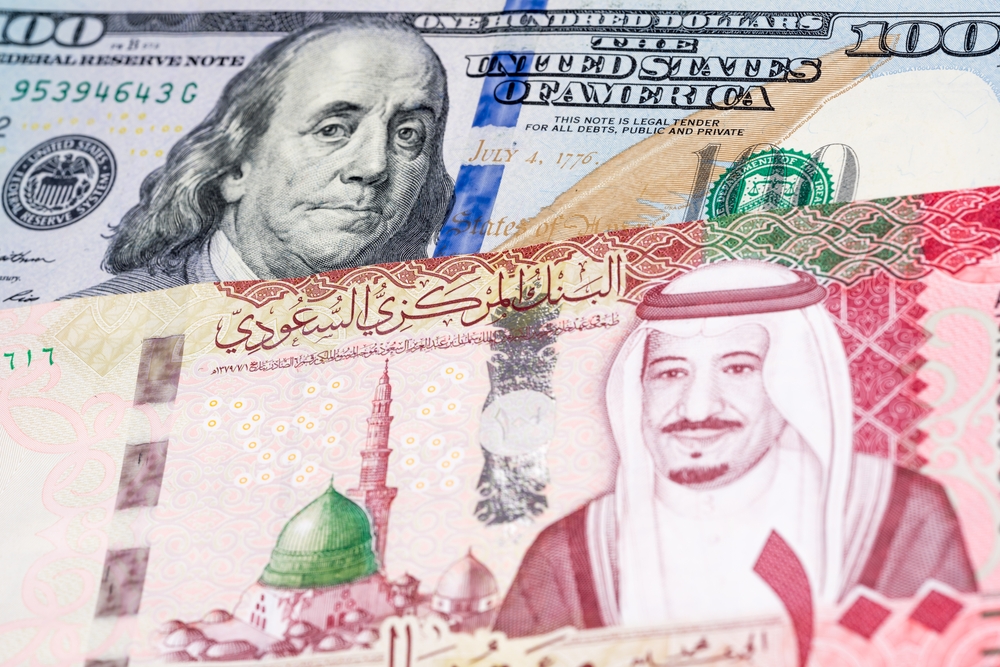
The Saudi riyal is just one Middle Eastern currency pegged to the US dollar.
The ongoing instability in the Middle East has evolved far beyond localised geopolitical concern. But while the headlines have naturally focused on soaring shipping costs, extended transit times and reduced business activity, a lesser discussed vulnerability is quietly squeezing corporate margins.
For UK firms with direct exposure to the Middle East (whether that’s through regional subsidiaries, local suppliers or Gulf-based clients), a primary risk is the structural currency trap driven by the fact that many of the region’s major currencies are pegged to the US dollar.
Our latest analysis explores what this rigid monetary architecture means for your cashflow and why generic forecasting cannot protect your bottom line in an increasingly volatile market.
Explaining the USD peg
Across the Gulf Cooperation Council (GCC) and the Middle East, fixed exchange rate regimes are the norm. The United Arab Emirates dirham (AED), Saudi riyal (SAR), Qatari riyal (QAR) and Omani rial (OMR) are all pegged directly to the US dollar. Even the Kuwaiti dinar, which relies on a weighted currency basket, treats the US dollar as its dominant component.
This setup provides the region with exceptional domestic stability and a reliable buffer against localised economic shocks. However, for a British business invoicing or buying in these territories, it fundamentally alters the nature of foreign exchange risk.
When you trade with a company in Dubai, Riyadh or Doha, you are not actually trading against an independent local currency. You are implicitly trading against the US dollar, traditional the global economy’s dominant force, but recently its most volatile component.
The two factors impacting businesses
This structural reality exposes UK corporations to a punishing double-whammy when geopolitical tensions flare up:
1. Safe-haven strength
During global crises, investors routinely dump riskier assets and flock to the US dollar. This flight to safety drives up the value of the greenback globally. Because regional currencies like the UAE dirham or Saudi riyal are bound to the dollar, they appreciate right alongside it. For a UK business trying to buy components or pay staff in the Gulf, the cost of acquiring those pegged currencies spikes dramatically, completely independent of local economic conditions.
2. Imported inflation and margin erosion
The British Chambers of Commerce (BCC) warns that the Middle East conflict is set to push UK inflation back up toward 3.8% as input costs bite. A weaker pound sterling compounded by an artificially strengthened, dollar-backed regional currency means that British importers face severely degraded purchasing power. Your sterling revenue buys fewer dirhams or riyals than it did a quarter ago, eroding the profitability of overseas ventures.
Why conventional forecasts fall short
Relying on traditional bank forecasts to manage this specific exposure is proving to be a dangerous strategy. As we noted in our recent report, SCB_QF_April26.pdf, expert predictions made just months ago look remarkably out of touch. Leading institutions frequently miss major market turns because they cannot model the sudden impact of a military strike, a localized political crisis or the compounding effect of an 80% spike in natural gas futures.
Consider the variance currently seen in major bank predictions. For a business converting £1 million into US dollars (and by extension, any currency pegged to it), the disparity between the maximum and minimum bank forecasts sits at a staggering $90,000. Attempting to budget your next two quarters on such a wide, erratic spectrum is closer to gambling than strategic planning.
Forging certainty in an unpredictable era
With 80% of UK firms now reporting direct or indirect negative impacts from the Middle East crisis, defensive financial positioning has become a priority. Business leaders are shifting their strategies, balance sheets are being tightened and cashflow management is under the microscope.
The only effective antidote to currency uncertainty is absolute structural certainty. Rather than trying to second-guess whether the Federal Reserve’s policies or regional unrest will swing the dollar-pegs in your favour, businesses must utilize sophisticated risk management solutions. Forward contracts and tailored treasury structures allow you to lock in exchange rates for future transactions, effectively removing the geopolitical premium from your international payments.
Don’t let rigid currency pegs dictating the value of Middle Eastern markets blindside your finance team. Proactive planning can ensure your cross-border operations remain resilient, no matter how long the current crisis drags on.
Are you managing cross-border cashflows exposed to Middle Eastern pegs? Contact our treasury experts today on 020 7898 0500 to discuss a bespoke risk mitigation strategy.